

Beach Tents Under the Sun
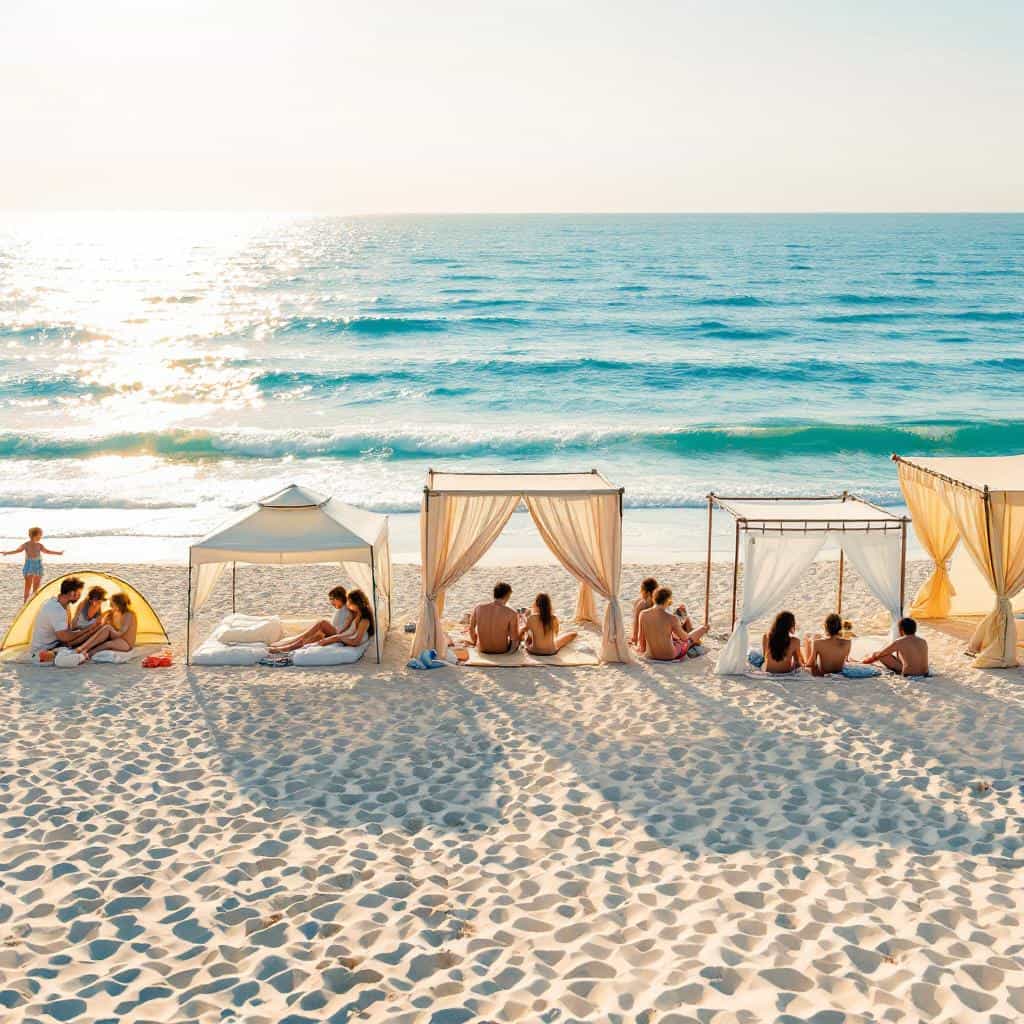
Beach tents have quietly evolved from niche camping accessories into an almost indispensable part of a modern day at the shore, sitting somewhere between an umbrella, a gazebo and a miniature living room on sand. Their rise reflects not only changing leisure habits, but also a growing awareness of the risks of excessive sun exposure and heat. Dermatologists now routinely recommend some form of physical shade in addition to sunscreen, and for parents of small children or people with fair or sensitive skin, a beach tent can transform a punishingly bright afternoon into something comfortable and safe. At the same time, the market has exploded with models that promise instant setup, high wind resistance, privacy for changing, and even built‑in floors and storage, which can be overwhelming for buyers. Understanding the differences between pop‑up pods, classic cabanas, large family shelters and hybrid canopies is crucial, particularly when cost, ease of assembly and real‑world durability vary so widely. As beach culture globalised—from the Italian Riviera to Australia’s Gold Coast—manufacturers rushed to serve increasingly demanding users, and their innovations, and missteps, are written into the design of the tents we see lined up on coasts today.
One of the most popular categories of beach tent is the pop‑up model, promoted with near‑magical marketing promises: throw it in the air and it assembles itself, no poles, no instructions, just instant shade. In practice, many modern pop‑up beach tents do come impressively close to this ideal. The structure relies on flexible, pre‑attached fiberglass or steel wire frames sewn directly into the fabric, which unfold and lock themselves into shape as the tent is released from its packed form. For families with young children, or older beachgoers who do not want to wrestle with pole sleeves in the wind, this can be a genuine advantage. Entry‑level pop‑up tents from lesser‑known brands typically start around 30–40 euros or US dollars, while well‑known outdoor brands charge between 60 and 120 for larger, more robust models with UV‑protective coatings and sturdier zippers. The main trade‑off comes at the end of the day: folding a pop‑up back into its compact disc shape can be frustrating, with a learning curve that has generated countless online tutorials and a fair share of broken frames. Many users recall their first attempt as a kind of beachside slapstick, a tangle of springy hoops and flying sand, which underlines that “easy to set up” does not always mean “easy to pack away”.
Traditional pole‑based beach tents offer a different set of advantages and inconveniences, rooted in the long history of tent design that goes back to military encampments and nomadic shelters. Instead of wire frames, these models use separate poles—usually fiberglass or lightweight aluminium—that must be threaded through sleeves or clipped into hubs, much like a small camping tent. The assembly can take anywhere from five to twenty minutes depending on size and experience, and requires a bit of space and patience. Yet many seasoned beachgoers still prefer them, because this design tends to be more modular and repairable. If a pole segment snaps, it can often be replaced for a few euros instead of discarding the entire shelter. Mid‑range pole‑based beach tents, often marketed as “family beach shelters”, range from 70 to 150 in Europe and North America, with premium models reaching 200 or more when they include reinforced fabrics, extended awnings and sophisticated ventilation systems. Their disassembly is generally straightforward—the reverse of setup—and they pack into elongated bags that fit more easily into car trunks than the rigid discs of pop‑up tents. Historically, this is an evolution of the canvas cabanas that lined early 20th‑century resort beaches on the French and Italian coasts, where attendants would assemble and dismantle them daily; the modern consumer version captures some of that sturdiness, without needing a dedicated staff.
Beyond pop‑up and classic designs, the market has seen the rise of hybrid beach canopies, often known by brand‑driven names but conceptually similar: semi‑open shelters supported by flexible poles that create a floating roof stretched over the sand and anchored with sandbags or stakes. These structures, inspired as much by windsurf sails as by tents, prioritise airflow and shade over full enclosure. They have become particularly popular among younger groups and surfers who value an open, social space on the beach. Prices for these canopy‑style shelters typically start around 80 and can go up to 200 or more depending on size, fabric quality and branding—the more fashionable lifestyle labels command a premium. Installation can be surprisingly quick: users lay out the fabric, fill attached bags with sand or stones, insert the poles, and tension the canopy so it stands like a minimalist shade sculpture. Taking them down is equally intuitive, which earns high marks for ease of use compared with some fully enclosed models. The drawback is reduced protection against blowing sand, sideways rain or the curious gaze of other beachgoers; these canopies do not offer privacy for changing clothes or nursing, and in very strong winds, their sail‑like structure can become a liability without meticulous anchoring.
Full‑height beach cabanas, which resemble scaled‑down gazebos, occupy yet another niche, often favoured by multi‑generational families or groups who want a fixed base for an entire day. These structures can cover an area large enough for several chairs, coolers and even a cot, effectively transforming part of the shoreline into a semi‑private living room. Modern cabanas frequently feature adjustable side walls or curtains, allowing users to block sun from different angles or ensure privacy. The engineering is closer to that of event canopies than simple tents, with telescopic metal legs and a central truss system supporting a stretched roof. As a result, setup times are longer, often 10–20 minutes with two people, and the packs are bulkier and heavier. On the cost side, entry‑level beach cabanas start around 120–150, while robust, corrosion‑resistant models from reputable outdoor brands can cost between 200 and 400, especially if they use high‑denier fabrics with strong UV protection. Some resort towns historically rented similar cabanas by the day, a practice still seen in parts of Spain and the United States, where beach clubs handle the assembly; the consumer versions essentially bring that resort experience into the do‑it‑yourself era, at the price of hauling and assembling the structure oneself.
Ease of assembly and disassembly is one of the most heavily advertised features across all these categories, yet manufacturers’ claims often gloss over important nuances. Engineers and product testers note that true ease is not just a matter of how quickly a tent can be erected under ideal conditions, but how reliably an ordinary person can repeat the procedure amid wind, crowds and tired children. Consumer organisations that conduct comparative tests frequently record both “first‑time setup” and “experienced setup” times, finding that pop‑up tents may go from bag to standing in under a minute, but can require five to ten minutes of wrestling to fold properly until the user develops the right technique. Pole‑based tents invert this pattern: the first setup might take twenty minutes with instruction‑sheet confusion, but can be reduced to five minutes after a few outings, with packing away remaining simple. Cabanas and large canopies virtually require two adults for stress‑free handling, especially when wind tries to turn them into kites during assembly. In interviews, outdoor‑gear designers stress the importance of clear colour‑coded components, pre‑attached guylines and intuitive clips, which can reduce perceived complexity more effectively than any claim of “instant” mechanics on the box.
When it comes to cost and value, the picture becomes more complex, because the sticker price of a beach tent does not always reflect its long‑term worth. Budget tents under 40 may be perfectly adequate for occasional users, tourists on a once‑a‑year seaside trip, or students organising a weekend outing. However, such models often compromise on fabric thickness, UV‑blocking coatings and stitching quality, leading to tears, broken zippers or faded, brittle material after a single season under intense sun. Mid‑range products in the 60–120 bracket tend to offer a better balance, with UPF 50+ fabrics, reinforced seams and sturdier frames, making them a popular choice for families planning repeated use over several summers. At the upper end, above 150 and up to 400 for large cabanas, buyers are often paying for both durability and finer details: rust‑resistant aluminium poles, double‑layer windows, clever storage pockets and rapid‑clip mechanisms. Outdoor economists sometimes invoke the “cost per use” metric, pointing out that a 200 tent used twenty times over four years effectively costs 10 per outing, while a cheap 30 tent that fails after three uses is more expensive in practical terms. Still, they caution against overbuying: not everyone needs a storm‑resistant fortress to sit near calm, sheltered shores, and for some travellers constrained by luggage size, a simpler model remains the sensible choice.
Beyond engineering and price, health considerations play a central role in how experts assess beach tents, and they often challenge common beliefs. Many consumers assume that sitting under any shade equals complete protection from harmful ultraviolet radiation, but dermatologists point out that reflected and scattered UV can reach the skin even inside a tent. Sand and water reflect sunlight, and open‑fronted shelters allow rays to enter at oblique angles. Therefore, while a quality beach tent with certified UPF 50+ fabric can significantly reduce direct exposure, physicians still recommend sunscreen on exposed skin, hats and sunglasses, particularly for children and people with a history of skin cancer. Some manufacturers have responded by designing tents with extendable front flaps and side panels that can be repositioned throughout the day as the sun moves, creating more comprehensive coverage. Others offer darker interior linings that reduce glare and perceived heat, though this can slightly increase internal temperature if ventilation is poor. Experts in ergonomics add that shade also mitigates heat stress; a well‑ventilated beach shelter may be several degrees cooler than the surrounding sand, which can make the difference between a pleasant afternoon and heat exhaustion. The key, they say, is balancing airflow and enclosure: fully sealed tents trap heat, whereas open, cross‑ventilated designs with mesh windows allow breezes to pass without inviting in too much sand.
Another overlooked dimension is warranty and after‑sales support, which can dramatically alter the real cost of a beach tent over its lifetime. Many low‑end models sold through discount chains or generic online marketplaces come with only the minimum statutory guarantee—often one or two years limited to manufacturing defects, and sometimes difficult to claim in practice. By contrast, established outdoor brands frequently advertise extended warranties of three to five years on fabric and seams, and lifetime coverage on metal poles, though they explicitly exclude damage from misuse or extreme weather. Some companies also maintain spare‑part catalogues, allowing customers to buy replacement poles, anchors or guy ropes instead of discarding the whole tent, an approach that aligns with the broader movement toward more sustainable consumption. Seasoned beachgoers often share stories of contacting manufacturers after a pole snapped or a zipper failed, only to receive replacement components at little or no cost, effectively extending the product’s life well beyond what a cheaper, non‑supported tent could achieve. Consumer advocates advise reading warranty terms carefully, checking whether UV damage, corrosion from salt water or wind‑related breakage are covered, since beach use exposes equipment to some of the harshest conditions. They also suggest registering products when required, keeping receipts and even photographing any defects early, as brands are more likely to honour claims when documentation is clear and prompt.
The cultural meaning of beach tents has shifted as well, influencing how buyers perceive their advantages and inconveniences. In some coastal communities, particularly in Northern Europe and parts of East Asia, bringing a substantial beach shelter signals a focus on family comfort and health, a kind of mobile domesticity that turns even a rough stretch of shore into a safe play area for children. In countries like Australia, where the “Slip‑Slop‑Slap” sun‑safety campaign evolved into “Slip‑Slop‑Slap‑Seek‑Slide” to include seeking shade, public‑health messages explicitly encourage the use of shelters alongside clothing and sunscreen. Yet there are tensions: some local authorities worry about crowded beaches turning into tent cities that obstruct views and emergency access, and a few popular destinations have experimented with size limits or designated areas for larger cabanas. Regular beachgoers share anecdotes of arriving early just to claim a good spot where their tent won’t block others, or of negotiating with neighbours over the subtly shifting line between personal comfort and communal space. These social considerations intersect with design choices: lower‑profile, open tents may be more neighbour‑friendly than towering, fully enclosed cabanas, which, while offering excellent privacy and wind protection, can be perceived as imposing.
Choosing the right beach tent, then, involves more than reading a few marketing slogans about instant setup or premium fabric; it requires matching the features, price and warranty to one’s actual patterns of use and coastal environment. For a solo traveller or couple who occasionally visit sheltered bays, a compact pop‑up tent in the 40–80 range, with verified UPF 50+ protection and clear folding instructions, may be entirely sufficient, accepting a bit of packing frustration as the trade‑off for lightness and speed. Families with young children or elderly relatives might lean toward mid‑sized pole‑based shelters between 80 and 150, prioritising robust frames, well‑designed ventilation and a floor that keeps toys and bags off hot sand, plus a multi‑year warranty that covers repeated summer holidays. Larger groups who essentially set up a daylong base camp, especially on wide, windswept beaches, could justify the investment in a 200‑plus cabana or hybrid canopy with reinforced poles, generous guying options and side panels, acknowledging that assembly will be a two‑person job and storage space in car or home is required. Whatever the category, experts insist on a few universal practices: test‑pitch a new tent at home or in a park before the first beach trip, learn how to secure it with sandbags or stakes appropriate to local conditions, and respect both the environment and fellow visitors by keeping clear of dunes, lifeguard paths and crowded access points. In the end, a beach tent is not merely a piece of fabric and poles; it is a small, portable microclimate, a compromise between nature’s openness and the human desire for shade, privacy and comfort under an increasingly intense sun. As climate change brings hotter, more extreme summers to many coasts, such shelters are likely to become even more central to seaside life, forcing designers, regulators and beach lovers alike to keep refining this delicate balance between convenience, cost, protection and the simple joy of sitting by the waves.
You may also like

Why Anti-Hail Car Covers Are Becoming a Global Must-Have
Anti-hail car covers, once a niche accessory, are rapidly gaining traction as extreme weather intensifies. This article explains how these covers work, the materials that make them effective, average prices, regional sales trends, and what drivers should look for when choosing one.

How Airbnb Broke Transaction Records in Italy: Inside the Strategy Powering a Hospitality Revolution
Airbnb has set new transaction records in Italy, marking one of its strongest markets in Europe. This article examines how the platform achieved unprecedented booking volumes and revenues through a mix of regulatory adaptation, strategic partnerships, dynamic pricing, rural expansion and brand repositioning. It also explores the broader economic, social and political implications of Airbnb’s growth in the Italian tourism ecosystem.
Short‑Term Rentals in Italy 2026: New Rules, Tax Duties and Paperwork for Holiday Homes
From 2026, Italy is expected to tighten the regulatory and fiscal framework for short‑term holiday rentals. This article explains the coming obligations for hosts, the likely evolution of national rules, the interaction with local regulations, and the documentation that owners and property managers will need to handle with the Agenzia delle Entrate.
The Best Compact Cameras of 2026
A comprehensive 2026 guide to the best compact cameras, with a special focus on professional underwater models equipped with optical zoom. The article examines leading models, price ranges, global sales rankings, regional market shares, and buyer opinions, offering context on how the compact segment is evolving in the age of smartphones.

Top 10 Fans to Beat the Heat in 2026: Prices, Pros, Cons and Warranty Explained
A detailed guide to the top 10 fans to fight summer heat in 2026, comparing tower, pedestal, desk and smart models. The article covers prices, strengths, weaknesses, energy consumption and warranty terms, with practical advice on how to choose the right fan for different rooms, budgets and needs.