

Why Anti-Hail Car Covers Are Becoming a Global Must-Have
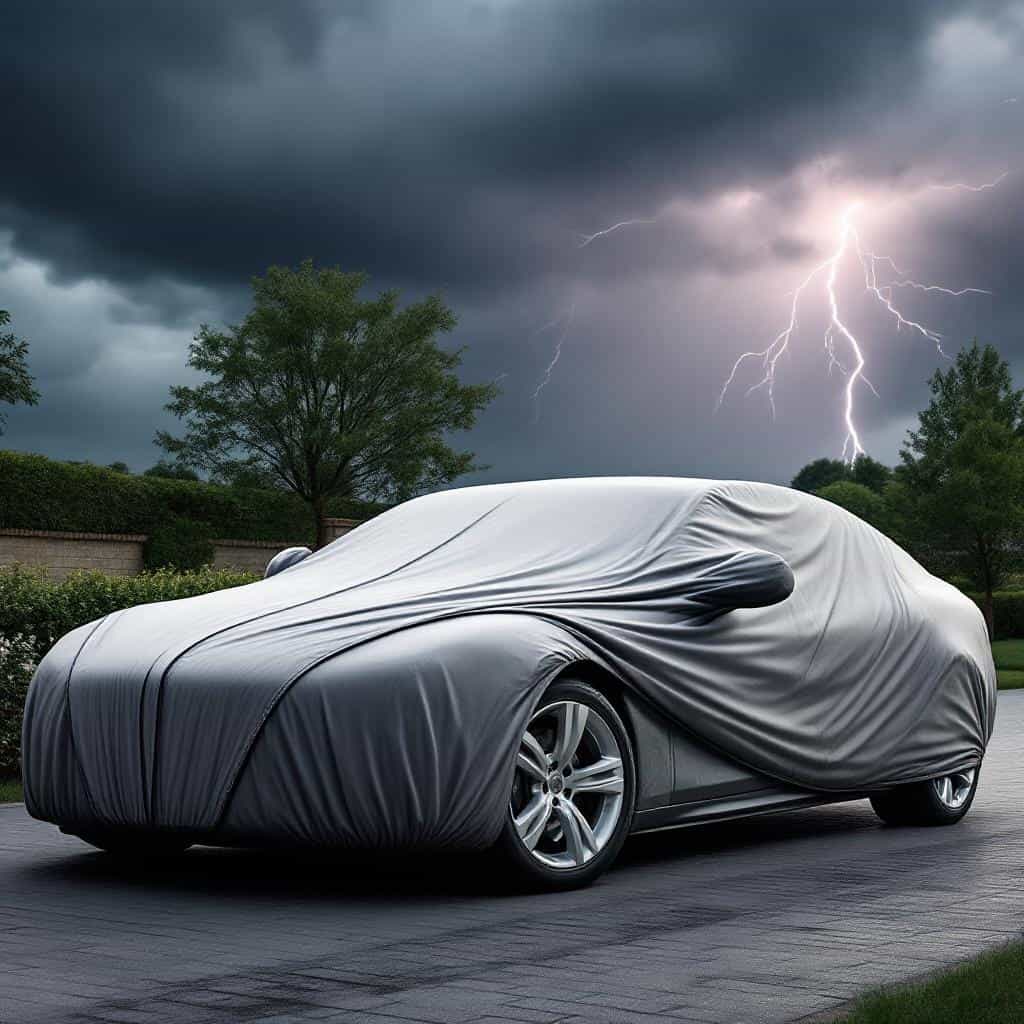
When golf-ball-sized hailstones pelted the suburbs of Dallas in spring 2023, social media quickly filled with grim photos: windshields looking like spiderwebs, roofs peppered with craters, and repair shop queues stretching for weeks. Among the images, though, another trend emerged—cars neatly tucked under bulky, padded covers that survived the storm virtually unscathed. Those covers, known as anti-hail car covers, have gone from oddity to necessity in many regions increasingly hammered by severe weather. Once marketed mainly to enthusiasts and fleet owners, they are now part of a broader conversation about how ordinary drivers can adapt to a more volatile climate. As insurers hike premiums in hail-prone areas and households struggle with rising repair costs, a relatively simple textile-and-foam solution is quietly rewriting the economics of car ownership under the open sky.
On the surface, an anti-hail car cover looks like an oversized sleeping bag for vehicles, but the technology and thought behind it are surprisingly sophisticated. Unlike a standard dust or rain cover, anti-hail models use multilayer construction with shock-absorbing materials designed to dissipate the kinetic energy of falling ice before it reaches the metal and glass surfaces. The key function is not just to keep the car clean or dry, but to transform direct high-impact blows into a softer, distributed pressure spread across the padding. This is why the best products are noticeably thick, heavy, and shaped to stay taut under gusty winds, instead of flapping loosely like traditional covers. In practice, these covers act as a sacrificial outer skin that absorbs the violence of the storm, sparing the far more valuable structure beneath.
The core functionality of an anti-hail cover can be broken into three main pillars: impact mitigation, environmental shielding, and deployment practicality. Impact mitigation is the headline feature: when hailstones strike, the cover’s foam layers compress momentarily, turning the sharp, localized hit into a broader, gentler push that metal panels and glass can withstand without denting or cracking. Many manufacturers specify maximum hail diameters—often around 2 to 2.5 centimeters for basic models and up to 4 or even 5 centimeters for premium versions—though real-world performance naturally depends on wind speed and repeated impacts. Environmental shielding is the more subtle function: in addition to hail, these covers often offer UV resistance, rain protection, and partial thermal insulation, meaning they prevent paint oxidation, clearcoat microcracks, and interior fading that come from intense sun exposure. Finally, deployment practicality matters because a cover that takes 30 minutes to install simply will not be used regularly; newer models rely on quick-clip straps, color-coded attachment points, and even semi-rigid panels that help the cover drape correctly in under five minutes for a mid-size sedan.
At the heart of these products are materials borrowed from both the sports and packaging industries, adapted to withstand outdoor conditions. The most common cushioning material is closed-cell polyethylene (PE) foam, familiar to anyone who has handled protective sports pads or high-end camping mats. PE foam is prized because it is lightweight, does not absorb water, and recovers its shape after compression, allowing a cover to endure multiple hailstorms without permanent deformation. In higher-end covers, multi-density foams are layered—softer foam near the car to avoid micro-scratches, firmer foam farther out to better absorb stronger blows. Some brands experiment with ethylene-vinyl acetate (EVA) foam inserts for sections directly above the windshield and roofline, creating reinforced zones in the areas most likely to be struck. The outer shell is usually a woven polyester or nylon coated with polyurethane (PU) or polyvinyl chloride (PVC) to achieve water resistance and UV stability, mimicking the fabrics used in marine covers and heavy-duty tents.
The inside of an anti-hail car cover is often the most underrated part, yet it is crucial for long-term vehicle health. A common misconception is that any thick padding will suffice, but abrasive or moisture-trapping linings can cause the very damage owners hope to avoid. To counter this, reputable manufacturers use soft, brushed polyester or nonwoven polypropylene as inner layers, materials that reduce the risk of swirl marks or fine scratches on clearcoat when the cover is put on or removed. Breathability is the other major concern: fully waterproof but non-breathable covers can trap condensation, creating a microclimate ideal for corrosion, mildew, and even electronic issues in humid regions. That is why several brands advertise “micro-perforated” shells or integrate air vents to let moisture gradually escape while still blocking direct rain and hail. Automotive materials scientist Dr. Helena Ortiz from a European testing lab notes that the best-performing covers in their trials combine a hydrophobic, UV-stable exterior with a moderately breathable intermediate layer, preserving both impact performance and the car’s long-term finish.
The question of durability inevitably comes up, especially when buyers compare a single, large purchase to the recurring expense of repairs and insurance deductibles. High-quality anti-hail covers are typically rated to last between three and seven years, depending heavily on storage habits and climate. UV radiation is their primary enemy: prolonged exposure degrades polymers, making outer fabrics brittle and reducing the elasticity of foam layers. Premium European models often carry UV resistance ratings similar to outdoor awnings and are treated with stabilizers that slow this degradation. In hail-intensive regions like the U.S. Great Plains or northeastern Spain, users report that covers can withstand dozens of moderate storms with no obvious performance drop, though extremely violent events with baseball-size hail remain outside the safe design envelope. In those rare cases, even a thick cover may only reduce, not eliminate, damage. Anecdotes from fleet operators—rental companies and corporate car-sharing services—suggest that the cost of replacing a worn-out cover after four years is still far lower than cumulative repair bills for unprotected vehicles exposed to multiple hail seasons.
Pricing is where anti-hail covers shift from technical curiosity to mainstream proposition. While basic dust covers can sell for as little as €20 or $20, effective anti-hail variants sit in a higher but still accessible bracket. Market surveys from European and North American retailers indicate that mid-range anti-hail covers for small and medium cars typically cost between €120 and €200 in the EU and around $130 to $220 in the U.S., with SUVs and pickup-compatible models often reaching €220–€300 or $230–$320. At the budget end, thinly padded models appear online for about €70–€100, but experts frequently warn that these products may only protect against small hail, offering little benefit when storms intensify. On the other side of the spectrum, premium covers with reinforced roof panels, custom sizing, and branded carrying bags can exceed €350 or $400. Insurers in some European regions, notably parts of Germany, Italy, and Austria, have begun offering modest discounts on comprehensive policies to drivers who can demonstrate regular use of anti-hail protection, subtly shifting the cost–benefit calculation further in favor of purchase.
Sales data, while still fragmented, indicate that adoption of anti-hail car covers follows the geography of hail risk almost as closely as meteorological maps. According to industry analysts who track automotive accessories, Europe currently accounts for an estimated 40–45% of global anti-hail cover sales by value, with Italy, Germany, France, Spain, and Austria leading the pack. Northern Italy’s Po Valley, frequently struck by severe summer hailstorms, has become a particularly strong market; local retailers report that in some provinces anti-hail covers now make up more than a third of their outdoor car cover sales. North America follows closely, with roughly 30–35% of global market share concentrated in hail-prone parts of the United States—Texas, Colorado, Oklahoma, Kansas, and the Dakotas—as well as southern Canadian provinces like Alberta and Saskatchewan. In these areas, demand spikes dramatically after major hail events, a phenomenon insurers and retailers wryly call the “post-storm awakening.”
In contrast, the Asia-Pacific region represents a smaller but rapidly growing fraction of sales, currently estimated around 15–20% globally. Australia in particular has seen a surge in interest following a string of damaging hailstorms in Sydney, Brisbane, and Canberra during the late 2010s and early 2020s. Japanese and South Korean manufacturers, long experts in automotive accessories, are beginning to export their own designs, often emphasizing compact storage and ease of handling—an important consideration in dense urban environments. Latin America and parts of Eastern Europe together account for the remaining 5–10%, though this share is expected to increase as awareness spreads and middle-class car ownership grows. Curiously, in some emerging markets, anti-hail covers are sometimes perceived as luxury items rather than practical tools, a misperception that industry players are working to dispel through targeted campaigns. Brazilian meteorologist and climate communicator Ana Luiza Marques points out that “hail is often seen as a freak, rare event, but data shows it is becoming more frequent in several sub-tropical regions, especially when convective storms intensify,” suggesting that the commercial map of hail protection will likely broaden in the coming decade.
There is a persistent belief among some drivers that parking under trees or improvised shelters is adequate hail protection, making dedicated covers unnecessary. However, accident statistics and insurer reports tell a different story. Branches break under the combined stress of wind and hail, transforming a supposedly protective canopy into a source of additional danger. Even smaller falling twigs can scratch paint when hammered by hail, compounding damage. Similarly, thin tarps or old blankets, a common last-minute improvisation, provide minimal impact absorption because they lack the compressible bulk that disperses energy. Automotive engineer Marco Lenti, who has tested numerous prototypes in a controlled hail simulator, notes that “thickness and material density are far more important than just layering fabric; a few centimeters of the right foam can outperform many folded blankets.” Anti-hail covers therefore occupy a middle ground between concrete garages, which offer near-total protection but are costly and not always available, and ad hoc solutions that may give a false sense of security. As climate change reshapes patterns of severe weather—shifting hail belts northward in Europe and altering storm seasonality in North America—these padded covers are emerging as one of the more accessible ways for everyday drivers to adapt, whether they live in dense cities or rural landscapes.
Looking ahead, the anti-hail car cover market seems poised for both technological refinement and wider cultural acceptance. Manufacturers are experimenting with modular designs in which roof and windshield segments can be quickly attached to lighter side panels, reducing overall weight while protecting the most vulnerable surfaces. Early prototypes of covers with integrated solar panels have appeared at trade shows, hinting at a future where hail protection doubles as an energy-harvesting skin for parked vehicles. There is also growing interest in more sustainable materials, such as recycled polyester fabrics and foams engineered for easier recycling at end of life, as environmental regulations tighten. Policymakers in some European municipalities are examining whether subsidies for hail protection—akin to incentives for home insulation—could reduce public and private repair bills after catastrophic storms. Whether such measures materialize or not, the trajectory is clear: as severe hail evolves from an occasional curiosity to a recurring risk in many regions, anti-hail car covers are transitioning from optional gadget to standard equipment in the mental checklist of car protection. For the modern driver, preparing for the next storm may start not with a trip to the mechanic, but with a padded, carefully engineered layer rolled up in the trunk, ready to be unfurled when dark clouds gather on the horizon.
You may also like

Beach Tents Under the Sun
From pop-up canopies to family cabanas, beach tents have become essential gear for sun‑safe days on the shore. This in‑depth guide compares the main types of beach tents, examining advantages, drawbacks, ease of assembly, price ranges, durability and typical warranty options, with expert opinions and common myths debunked.

How Airbnb Broke Transaction Records in Italy: Inside the Strategy Powering a Hospitality Revolution
Airbnb has set new transaction records in Italy, marking one of its strongest markets in Europe. This article examines how the platform achieved unprecedented booking volumes and revenues through a mix of regulatory adaptation, strategic partnerships, dynamic pricing, rural expansion and brand repositioning. It also explores the broader economic, social and political implications of Airbnb’s growth in the Italian tourism ecosystem.

Short‑Term Rentals in Italy 2026: New Rules, Tax Duties and Paperwork for Holiday Homes
From 2026, Italy is expected to tighten the regulatory and fiscal framework for short‑term holiday rentals. This article explains the coming obligations for hosts, the likely evolution of national rules, the interaction with local regulations, and the documentation that owners and property managers will need to handle with the Agenzia delle Entrate.

The Best Compact Cameras of 2026
A comprehensive 2026 guide to the best compact cameras, with a special focus on professional underwater models equipped with optical zoom. The article examines leading models, price ranges, global sales rankings, regional market shares, and buyer opinions, offering context on how the compact segment is evolving in the age of smartphones.

Top 10 Fans to Beat the Heat in 2026: Prices, Pros, Cons and Warranty Explained
A detailed guide to the top 10 fans to fight summer heat in 2026, comparing tower, pedestal, desk and smart models. The article covers prices, strengths, weaknesses, energy consumption and warranty terms, with practical advice on how to choose the right fan for different rooms, budgets and needs.