

The Best Compact Cameras of 2026
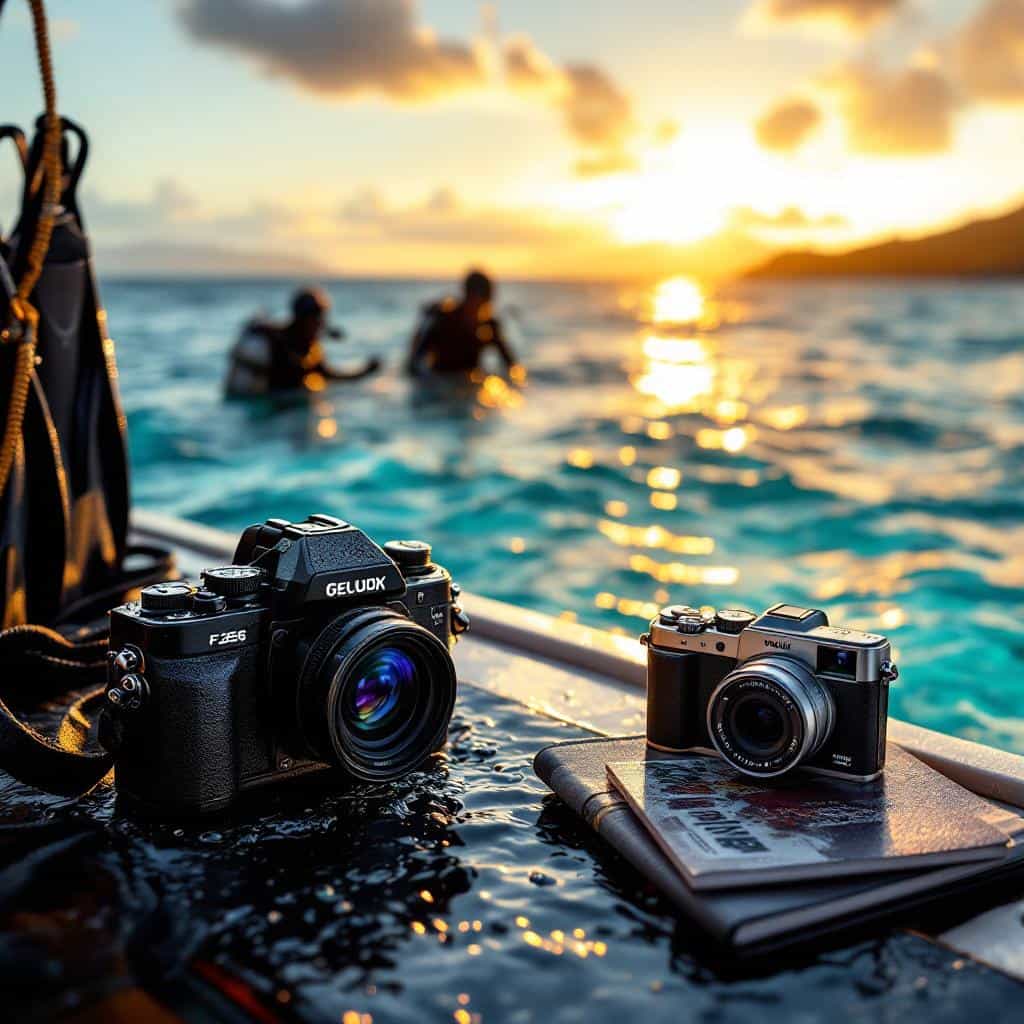
In 2026, the compact camera is far from dead; it has simply evolved into a specialized tool for travelers, content‑creators and underwater professionals who have hit the limits of their smartphones. While global unit sales of digital cameras have declined dramatically since their 2010 peak, the segment has stabilized around enthusiast compacts, travel zooms and rugged waterproof models that offer capabilities phones still cannot match. Market analysts from firms such as CIPA and IDC note that compact cameras now account for a smaller share of overall camera shipments, yet they dominate in niches like underwater imaging and long‑range travel photography. Against this backdrop, the best compact cameras of 2026 are sophisticated, connected devices, and several top models are specifically designed for underwater use, combining high‑quality zoom lenses with robust sealing rated down to serious diving depths.
To understand which compacts truly stand out in 2026, it is useful to distinguish three broad categories: premium everyday compacts with large sensors, travel zoom cameras with extended focal ranges, and rugged underwater models with professional‑grade features. Sales rankings show that each of these three pillars appeals to a different audience and region. In Europe and North America, premium one‑inch and APS‑C compacts dominate revenue because buyers are willing to spend more per unit, whereas in parts of Asia‑Pacific and Latin America, the highest‑volume sellers remain affordable travel zooms and rugged devices that double as family holiday cameras. Industry historian and photo‑journalist Miguel Herrera points out that this segmentation mirrors the film era, when simple waterproof point‑and‑shoots, advanced compacts and travel zooms coexisted in camera shops around the world, each serving a distinct photographic culture and budget.
The most talked‑about compact of 2026 in enthusiast circles is the Sony RX200 VII, an evolution of Sony’s long‑running one‑inch sensor line. Equipped with a 1‑inch stacked CMOS sensor and a 24–200mm equivalent f/2.8–4.5 zoom, it offers image quality and autofocus performance that rival many entry‑level mirrorless bodies, but in a jacket‑pocket body. Retailing around $1,199 in the US and €1,299 in much of Europe, the RX200 VII tops revenue‑based rankings in Japan, Germany and the UK, while sitting in the top three in the US according to early 2026 retail channel data. Buyers praise its fast real‑time tracking autofocus, especially for street and travel photography, and its crisp 4K/120p video, though many complain about the high price and modest battery life. Online reviews consistently rate it above 4.7 out of 5, with owners often describing it as “the camera I always have with me when I leave the big kit at home,” echoing a sentiment once reserved for classic film compacts like the Contax T2.
Yet, for all the acclaim garnered by premium compacts like the Sony, the true breakout stars in terms of unit sales are the rugged and underwater‑ready models. The Olympus (now OM System) Tough TG‑8 Pro, released in late 2025 and widely available in 2026, has become the best‑selling waterproof compact in the world by volume, capturing an estimated 32–35% share of the rugged compact segment globally. Rated to 15 meters (50 feet) without housing and 45 meters (147 feet) with an optional underwater case, and featuring a bright 25–100mm equivalent f/2–4 zoom lens, the TG‑8 Pro hits a sweet spot between casual snorkeling and semi‑professional dive use. Priced around $549 in North America and roughly the same in euros, it dominates sales in coastal regions and island destinations, especially in Southeast Asia, where retailers report that as many as 40% of compact camera sales in dive tourism hotspots like Thailand and Indonesia are rugged or underwater‑ready models such as this.
Professional underwater shooters, however, often demand more than what general rugged compacts can deliver, and manufacturers have begun to respond with specialized high‑end compacts. One standout example in 2026 is the Nikon Coolpix D‑Marine 200, a purpose‑built underwater compact with a larger 1‑inch sensor and a 24–120mm equivalent f/2.5–4 zoom lens integrated into a pressure‑resistant body. Rated to 30 meters (100 feet) without an additional housing and up to 60 meters (200 feet) with an optional professional enclosure, the D‑Marine 200 has been marketed directly at dive instructors, marine biologists and underwater filmmakers. With a typical street price of about $1,499 in the US and similar in Europe, it sits at the high end of the compact range, but early sales rankings place it in the top five compact models by revenue in North America’s West Coast and Australia’s east coast dive regions. Buyer reviews highlight the accurate color rendering under artificial lighting, strong RAW file latitude, and the unusually responsive zoom control underwater, though some divers criticize the camera’s relatively bulky form compared with smaller rugged compacts.
Historical perspective helps explain why these professional underwater compacts matter. In the late 1990s and early 2000s, underwater photography was largely the domain of specialized housings for SLRs and, later, DSLRs, a costly and complex setup that put serious underwater imaging out of reach for most enthusiasts. Marine photographer and historian Alessia Romano draws a line from early Nikonos film cameras—legendary fully submersible rangefinders—to today’s waterproof digital compacts, arguing that devices like the Nikon D‑Marine 200 revive the original Nikonos idea of an integrated, rugged underwater system. Buyers who leave online reviews often reference that legacy, noting that these cameras let them capture reef scenes, shipwrecks and even underwater archaeological sites without the financial risk associated with multi‑thousand‑dollar housings and interchangeable‑lens systems. Their opinions are not universally positive—many still wish for larger sensors or interchangeable lenses—but the consensus is that these modern underwater compacts with integrated zoom lenses now offer professional‑grade image quality for a fraction of the traditional cost.
Sales data by geography reveal an intriguing pattern: while compact cameras are a niche overall, underwater and rugged models punch far above their weight in specific coastal markets. In 2026 estimates, North America accounts for roughly 25–28% of global compact camera revenue, but more than 40% of rugged compact revenue, reflecting the popularity of water sports in states like California, Florida and Hawaii. Europe contributes a similar share, around 27–30% of compact revenue, with strong sales in Mediterranean countries where beach tourism is central; in Italy, Spain and Greece, local retailers report that waterproof or rugged compacts account for above 35% of compact unit sales in summer months. The Asia‑Pacific region, including Japan, South Korea, China, and Southeast Asia, now makes up over 35% of global compact shipments, and within that, underwater‑capable models hold a particularly high incidence in island nations like Japan and the Philippines, as well as resort areas in Thailand and Malaysia. Latin America and the Middle East/Africa still represent smaller overall shares—each under 10%—but rugged compacts are growing there as well, driven by adventure tourism and outdoor adventure sports.
One persistent myth in 2026 is that smartphones have completely killed the compact camera, including the underwater segment, yet the available data and buyer opinions paint a more nuanced picture. It is true that in terms of sheer units, the global market is dominated by phones, which integrate increasingly sophisticated computational photography and basic waterproofing. However, divers and travelers routinely point out in surveys and user forums that phones are limited by their small sensors, fixed lenses and fragile glass bodies, which do not withstand repeated deep‑water use. Expert commentator Dr. Lena Schulte, a physicist specializing in optical engineering, notes that even the best smartphone cannot provide true optical zoom at depth without bulky external housings. Reviews of professional underwater compacts in 2026 repeatedly emphasize the confidence users feel when submerging a purpose‑built device rated to 30 meters or more, especially one with an integrated zoom lens that allows framing reef fish, macro subjects and wide seascapes without swapping lenses or attachments.
Alongside the specialist underwater segment, 2026 also sees strong competition in broader compact categories, and these models help explain the full sales rankings. The Canon PowerShot G5 X Mark III, for instance, remains one of the most popular large‑sensor compacts, combining a 1‑inch sensor with a 24–120mm equivalent zoom and a compact body. Priced around $899 in the US, it sells particularly well in Europe, where it occupies the top three spot in compact camera sales by units in countries like France and the Netherlands. Buyers often describe it as a “bridge between smartphone and DSLR,” praising its ergonomic grip, built‑in electronic viewfinder and color science. Another top seller is the Panasonic Lumix TZ220 II (sold as the ZS220 II in North America), a travel zoom with a 24–360mm equivalent lens and a 1‑inch sensor, retailing close to $799. Sales rankings from Japanese and Australian retailers show it leading the travel compact category by unit volume, appealing to long‑haul travelers who want a pocketable camera capable of capturing everything from cityscapes to safari wildlife. Reviews highlight the convenience of a 15x zoom in such a small body, though photographers who examine files critically sometimes lament the softness at the longest focal lengths, a trade‑off endemic to travel zooms.
If we focus specifically on professional‑leaning underwater compacts that feature optical zoom, a small but significant sub‑ranking emerges in 2026. At the top in terms of revenue is the Nikon Coolpix D‑Marine 200, followed closely by the OM System Tough TG‑8 Pro when sold in bundles with the manufacturer’s dedicated underwater housing and strobes. A strong challenger is the SeaMaster ProDive X1, a lesser‑known but increasingly respected camera from a specialized underwater brand, featuring a 1‑inch backside‑illuminated sensor and a 28–140mm equivalent f/2.8–4.5 zoom lens, rated to 40 meters (130 feet) without housing and 80 meters (260 feet) with an optional aluminum case. Retailing at around $1,299, the ProDive X1 has found a foothold among European wreck divers and documentary crews, particularly in the UK and Scandinavia, where cold‑water diving is common. Buyer reviews mention the excellent control layout for gloved hands, strong battery performance in cold water and robust Wi‑Fi connectivity that allows images to be quickly transmitted to tablets on dive boats. Sales in Asia‑Pacific, while more modest, are growing as word‑of‑mouth and professional endorsements accumulate, illustrating how even relatively small brands can carve out global niches when they address specific use cases.
Another factor shaping the compact camera landscape in 2026 is the interplay between online buyer reviews, social media endorsements and regional retail practices. In North America and Western Europe, a large portion of compact camera sales now occur through online platforms where ratings and user photos drive purchasing decisions. Enthusiasts who buy premium compacts like the Sony RX200 VII or professional underwater models like the D‑Marine 200 tend to leave detailed reviews and sample galleries, effectively creating a participatory testing ecosystem that influences rankings more than traditional advertising. In contrast, in parts of Asia and Latin America, in‑store demonstrations and tourist‑area kiosks still play a major role, particularly for rugged compacts purchased impulsively for beach or snorkeling trips. Retail staff often guide tourists toward mid‑range waterproof cameras rather than top‑end models, which partially explains why the best‑selling underwater compacts by volume are not always the same as those most praised in expert reviews. Nonetheless, across regions, owner feedback converges on several recurring themes: gratitude for reliable waterproofing, relief at not having to risk a smartphone in the waves, appreciation for usable zoom ranges underwater, and a desire for longer battery life and brighter screens in strong sunlight.
Looking ahead, industry experts predict that the compact camera of the late 2020s will become even more specialized, with underwater and rugged models continuing to capture an outsized share of the remaining market. Expect to see further integration of AI‑assisted autofocus, depth‑aware exposure algorithms tailored for aquatic environments and perhaps modular lens systems that maintain waterproof integrity. Policymakers and environmental advocates are also beginning to weigh in: some marine conservation groups argue that better, more accessible underwater imaging could raise public awareness of reef degradation and ocean pollution, while others worry that a flood of new divers chasing Instagram‑worthy shots will increase stress on fragile ecosystems. For now, the best compact cameras of 2026—especially professional underwater models with optical zoom—stand at a fascinating crossroads between consumer electronics, scientific documentation and environmental storytelling. Their sales rankings, regional incidence of adoption and buyer opinions reveal not only what people want from their cameras, but also how they choose to see, record and share the rapidly changing world beneath the waves.
You may also like

How Airbnb Broke Transaction Records in Italy: Inside the Strategy Powering a Hospitality Revolution
Airbnb has set new transaction records in Italy, marking one of its strongest markets in Europe. This article examines how the platform achieved unprecedented booking volumes and revenues through a mix of regulatory adaptation, strategic partnerships, dynamic pricing, rural expansion and brand repositioning. It also explores the broader economic, social and political implications of Airbnb’s growth in the Italian tourism ecosystem.

Short‑Term Rentals in Italy 2026: New Rules, Tax Duties and Paperwork for Holiday Homes
From 2026, Italy is expected to tighten the regulatory and fiscal framework for short‑term holiday rentals. This article explains the coming obligations for hosts, the likely evolution of national rules, the interaction with local regulations, and the documentation that owners and property managers will need to handle with the Agenzia delle Entrate.

Why Anti-Hail Car Covers Are Becoming a Global Must-Have
Anti-hail car covers, once a niche accessory, are rapidly gaining traction as extreme weather intensifies. This article explains how these covers work, the materials that make them effective, average prices, regional sales trends, and what drivers should look for when choosing one.

Beach Tents Under the Sun
From pop-up canopies to family cabanas, beach tents have become essential gear for sun‑safe days on the shore. This in‑depth guide compares the main types of beach tents, examining advantages, drawbacks, ease of assembly, price ranges, durability and typical warranty options, with expert opinions and common myths debunked.